Table of Contents
How Private Label Clothing Works: Complete B2B Guide
Private label clothing is one of the most effective ways to launch and scale a fashion brand without owning a factory. Instead of investing in production infrastructure, brands partner with manufacturers who produce garments under their brand name.
But here’s the reality: private label is not just “put your logo on a product.” It is a structured manufacturing process that requires technical clarity, cost planning, and supplier coordination. If you misunderstand this, you will lose money before your first collection even launches.
This guide explains how private label clothing actually works—from concept to production to delivery—based on real manufacturing workflows.
What Is Private Label Clothing?
Private label manufacturing means a factory produces clothing that is sold under your brand.
- You control branding, positioning, and product direction
- The manufacturer handles production
- The final product carries your label
This model is widely used by startups, e-commerce brands, and retail chains because it reduces operational complexity while allowing full brand ownership.
Private Label vs OEM vs White Label
Before going deeper, you need to understand the difference:
- Private Label: Manufacturer may assist in design and development
- OEM: You provide full technical specifications
- White Label: Pre-made products with minimal customization
Most new brands should start with private label—not OEM—because it reduces technical risk.
Learn more:
Private Label vs OEM Manufacturing
Step 1: Define Your Product Strategy
Everything starts with clarity—not design.
- Product category (t-shirts, hoodies, dresses)
- Target market (budget vs premium)
- Price positioning
If you skip this step, your production decisions will be inconsistent and expensive.
Step 2: Prepare a Tech Pack
The tech pack is your product blueprint. Without it, production accuracy is impossible.
- Design sketches or references
- Measurements and size chart
- Fabric type and GSM
- Color references (Pantone)
- Printing, embroidery, and branding details
Most production mistakes come from weak or incomplete tech packs.
Step 3: Choose the Right Manufacturer
This is where most brands fail.
- Small factories → flexible MOQ, limited scalability
- Mid-scale factories → best balance for most brands
- Large factories → high MOQ, strong export capability
Choosing based on price alone is a mistake. You need alignment between your product and factory capability.
Start here:
Find Reliable Women's Clothing Manufacturer Egypt
Step 4: Sampling Process
Sampling is where your idea becomes a real product.
- Prototype sample
- Fit adjustments and revisions
- Pre-production (PP) sample approval
Never move to production without approving a final sample. That’s how you avoid costly bulk errors.
Learn more:
Sampling Process in Egypt Clothing Factories
Step 5: Material Sourcing
Fabric selection defines both quality and cost.
- Cotton (basic to premium Egyptian cotton)
- Polyester and blends
- Special fabrics for sportswear or fashion
Using available fabrics reduces cost and lead time significantly.
Step 6: MOQ and Production Planning
Minimum Order Quantity (MOQ) is a core part of private label manufacturing.
- Small factories: 50 – 300 pieces
- Mid-scale factories: 300 – 800 pieces
- Large factories: 1,000+ pieces
Higher quantities reduce unit cost but increase risk.
Detailed breakdown:
Egypt Clothing Manufacturers MOQ Pricing Guide
Step 7: Bulk Production
Once the sample is approved, production begins.
- Fabric cutting and preparation
- Sewing and assembly
- Printing and embroidery
- Finishing and ironing
This stage must strictly follow the approved sample.
Step 8: Branding and Packaging
This is what makes your product “private label.”
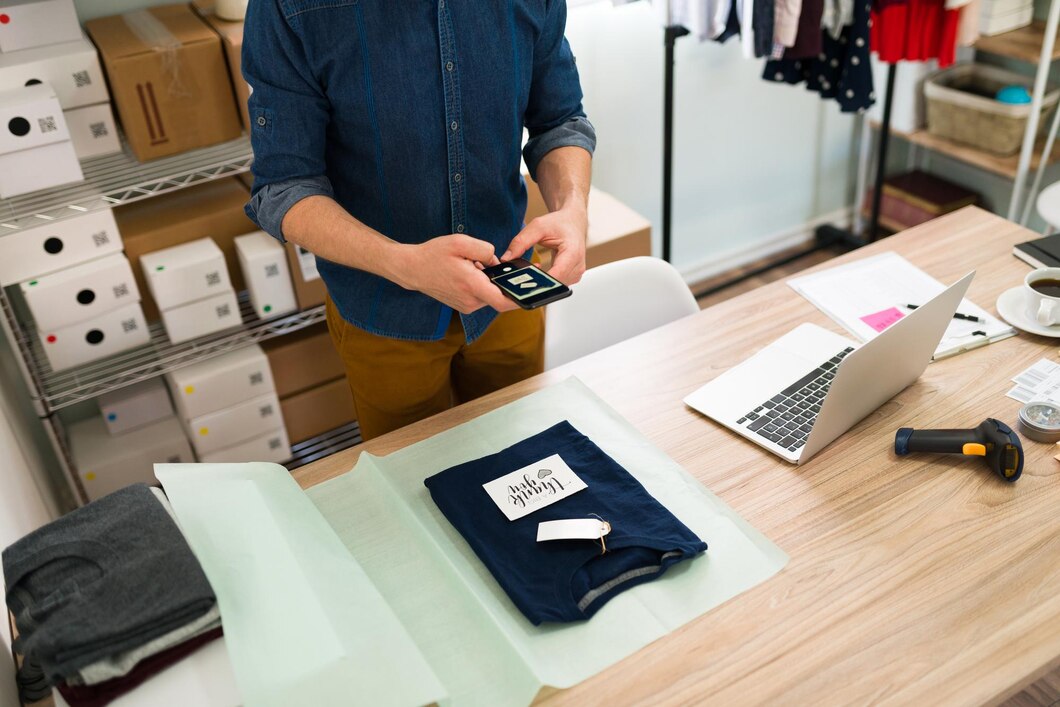
- Main labels and care labels
- Hang tags and packaging
- Barcodes and retail preparation
Branding directly affects perceived value and pricing.
Step 9: Quality Control
Before shipment, every order must go through inspection.
- Measurement checks
- Stitching and finishing inspection
- Packaging verification
Skipping proper QC is one of the fastest ways to damage your brand.
Step 10: Shipping and Delivery
The final stage is logistics.
- Air freight: faster, higher cost
- Sea freight: lower cost, longer timeline
Your shipping strategy impacts both margins and inventory planning.
Cost Structure of Private Label Clothing
Private label cost is not just manufacturing.
- Fabric (50–70% of total cost)
- Labor and production
- Printing and embroidery
- Packaging and branding
- Shipping and logistics
Typical production ranges:
- T-shirts: $3 – $6
- Hoodies: $8 – $18
- Dresses: $10 – $25+
Production Timeline
Private label production follows a structured timeline:
- Sampling: 1–3 weeks
- Material sourcing: 1–3 weeks
- Bulk production: 3–6 weeks
- Shipping: 1–5 weeks
Total lead time typically ranges from 30 to 90 days.
Common Mistakes in Private Label Manufacturing
- Unclear product specifications
- Choosing the wrong manufacturer
- Ignoring MOQ and cost structure
- Skipping proper sampling
These mistakes are expensive—and avoidable.
Why Egypt Is a Strong Choice for Private Label
- Access to premium cotton
- Competitive production cost
- Strategic location for export
- Flexible manufacturing ecosystem
Egypt offers a balanced environment for both new and scaling brands.
How to Start Your Private Label Production
To launch successfully:
- Define your product clearly
- Prepare a strong tech pack
- Choose the right manufacturer
- Start with sampling before scaling
Execution—not ideas—is what determines success.
Why Work With La Reine
La Reine helps brands launch and scale private label clothing with structured manufacturing systems.
- End-to-end production support
- Flexible MOQ options
- Strong quality control
- Export-ready manufacturing
Start Your Private Label Clothing Brand
If you are serious about building a clothing brand, private label manufacturing is the fastest and most scalable way to do it—when executed correctly.
Request a quote to receive detailed pricing, MOQ options, and production planning tailored to your brand.
0 Comments